




What Really Happens During an Auto Diagnostic Visit
An auto diagnostic is a step-by-step checkup that helps find the cause of warning lights, strange sounds, or performance issues in your vehicle. It is how a trained technician figures out what your car is trying to tell you before a small problem grows into a major repair. This kind of visit supports your safety on the road, your vehicle’s reliability, and your long-term budget.
Drivers around Westbury deal with heavy traffic, stop-and-go commutes, and plenty of short trips. Late summer can add extra miles with family outings, errands, and back-to-school runs. That kind of driving can bring out little issues you might have ignored. A nearby Mopar Certified team, like ours at Town & Country Jeep Chrysler Dodge Ram in Levittown, can perform a full diagnostic check even if you live or work closer to Westbury, so you can head into the next season with more confidence.
Why Your Vehicle Needs a Professional Diagnostic
A quick code scan at a parts counter is not the same as a full professional auto diagnostic in Westbury, NY or the surrounding area. A basic scan tool can read some error codes, then the person may suggest a part that might fix the issue. It does not confirm what actually failed or why it failed in the first place.
A professional diagnostic goes much deeper. Triggers that should send you in include:
- Check engine light or other warning lights staying on
- New or louder noises, such as squeals, knocks, or rattles
- Reduced fuel economy, sluggish power, or rough idle
- Hard or rough shifting, slipping, or delayed gear changes
- Concerns right before a New York inspection
By getting your car checked when you first notice these issues, you give the technician time to catch small faults before they become large breakdowns. In late summer, that can mean fixing problems before cooler weather, wet roads, and early sunsets add more stress to your daily drive.
Step One: Interview, Road Test, and Visual Check
A proper diagnostic visit does not start with a tool; it starts with a conversation. The technician or service advisor will ask questions such as:
- When did you first notice the problem?
- Does it happen only when the engine is cold or hot?
- Does it show up on the highway, at low speeds, or while stopping?
- Have there been any recent repairs, warning lights, or fluid leaks?
This “interview” helps narrow down where to look. After that, a road test is often the next step. The technician may take your vehicle on local streets or nearby main roads to:
- Reproduce noises, shakes, or jerks
- Feel how the steering and brakes respond
- Watch how the transmission shifts through the gears
- See if warning lights come on under certain conditions
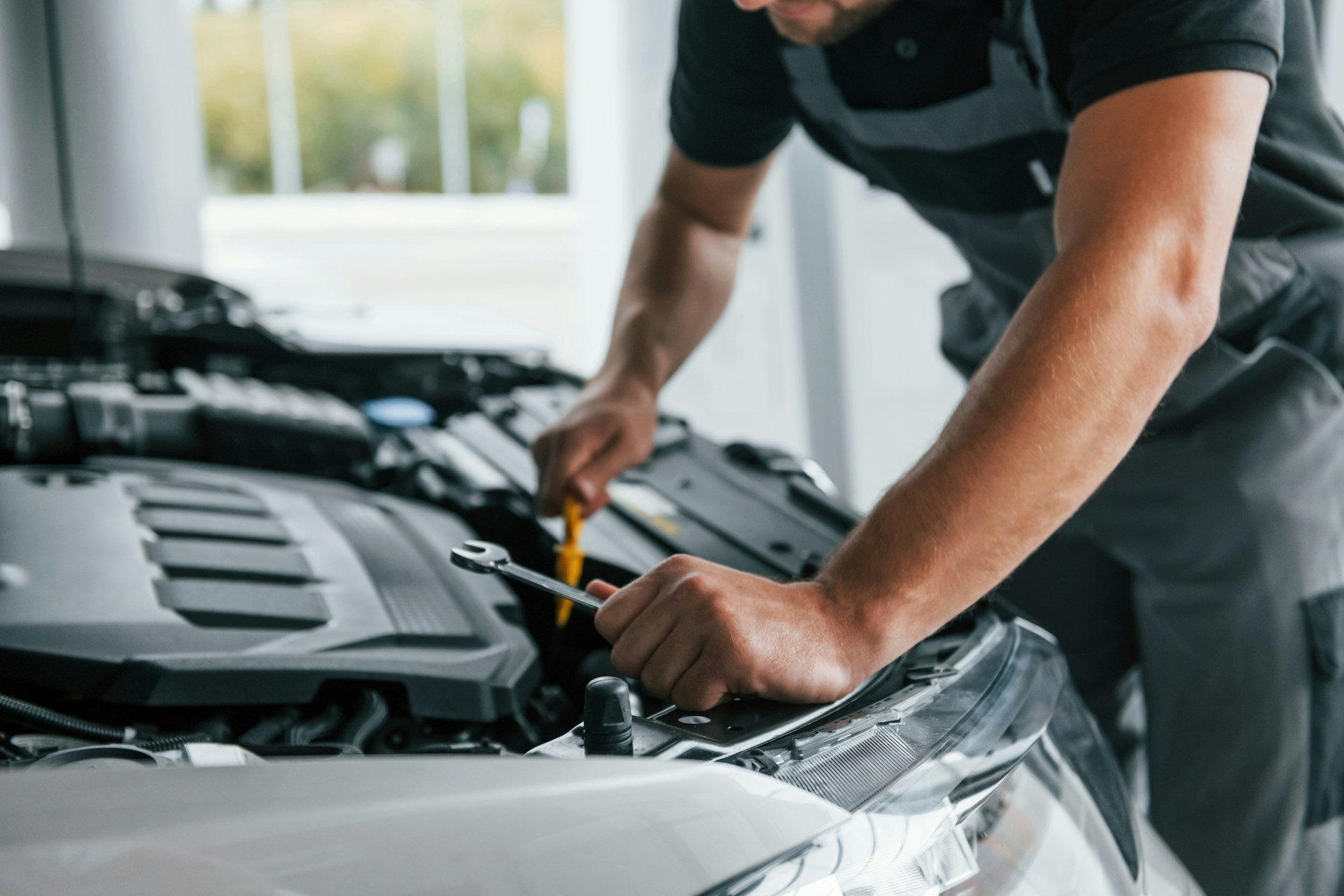
Once the road test is done, there is usually a quick visual inspection. The technician may check:
- Engine oil, coolant, brake fluid, and other fluid levels
- Belts and hoses for cracks, wear, or looseness
- Obvious leaks under the vehicle or around seals
- Tire condition and air pressure
- Any clear safety concerns, like worn wiper blades or weak lights
This first step sets the stage for the more detailed testing that follows.
Step Two: Connecting Advanced Diagnostic Tools
After the basic checks, the technician will hook up a scan tool to your vehicle’s OBD port. This is a small plug, usually under the dashboard, that allows communication with the car’s onboard computer systems. With an OEM-level scan tool, the technician can read stored and current trouble codes, plus see live data from many sensors.
Diagnostic trouble codes, or DTCs, are like clues. They point to areas such as:
- A sensor reading out of range
- A misfire on a specific cylinder
- A fault in the emissions system
- A communication issue between modules
However, a DTC is not the full answer. It does not always tell you which exact part is bad. It shows where to start looking. That is why the right equipment and training matter. With Mopar-focused tools, technicians working on Chrysler, Dodge, Jeep, and Ram models can often access more detailed information and system tests than a basic, generic scanner can see.
Step Three: Pinpoint Testing and System Checks
Once the codes and data are identified, the real detective work starts. The technician uses wiring diagrams, service information, and experience to move from general codes to specific tests. That might include:
- Checking sensor readings with a meter or lab scope
- Inspecting wiring and connectors for corrosion or damage
- Verifying power and ground supplies to certain modules
- Performing pressure or leak tests on mechanical parts
Different systems may be checked during an auto diagnostic in Westbury, NY and nearby areas, such as:
- Engine performance, including fuel and air delivery
- Transmission behavior under load and at different speeds
- Brake system performance and warning light causes
- Battery health, alternator output, and charging system function
- AC performance, vent temperature, and control operation
This step-by-step approach is what separates real diagnostics from trial and error. By testing instead of guessing, the technician can avoid needless part replacement and help keep you from coming back with the same problem again.
Step Four: Clear Results, Estimates, and Repair Plan
Once testing is complete, the technician records the findings and shares them with the service advisor. From there, issues are usually grouped and prioritized:
- Safety concerns that should be handled right away
- Items that can wait a bit, but should be planned for
- Preventative maintenance that can help avoid future trouble
You should receive simple, clear explanations, not just technical terms. For example, instead of just saying a code number, the advisor may explain which system is affected, what the risk is if it is ignored, and how the recommended repair helps.
You also get written estimates for the work. This helps you plan around:
- School or work schedules
- Daily commutes
- Upcoming trips or busy weeks
Handling repairs early can help protect warranty coverage and keep your vehicle in better shape for resale or trade-in later on.
Why Choose Town & Country for Diagnostics Near Westbury
For drivers near Westbury and across this part of Long Island, easy access to professional diagnostics matters. At Town & Country Jeep Chrysler Dodge Ram, our team works with Chrysler, Dodge, Jeep, and Ram vehicles every day, using Mopar-focused equipment and service information. That focus helps us understand how these vehicles behave in real local driving.
We also know that convenience is a big part of car care. Our service department offers:
- Online options to pick a service time
- A comfortable area to wait while work is done
- Options to help you manage transportation while your vehicle is in the shop
- Hours that include busy weekdays and select weekend times
With regular diagnostics and multi-point checks, we help keep your vehicle ready for changing Long Island conditions, from warm, humid days to cooler, wet weather. By staying ahead of problems, you support safer drives, steadier performance, and fewer surprises on your way through Westbury and beyond.
Restore Your Vehicle’s Performance With Expert Diagnostics
If your check engine light is on or something just feels off, our certified technicians at Town & Country Jeep Chrysler Dodge Ram are ready to pinpoint the issue quickly and accurately. Schedule your auto diagnostic in Westbury, NY so we can identify the problem before it becomes a costly repair. If you have questions before booking, feel free to contact us and we will help you choose the best time and service for your vehicle.
Connect with us


- August 2026
- July 2026
- June 2026
- May 2026
- April 2026
- March 2026
- February 2026
- January 2026
- December 2025
- November 2025
- October 2025
- September 2025
- August 2025
- July 2025
- June 2025
- May 2025
- April 2025
- November 2023
- October 2023
- September 2023
- August 2023
- July 2023
- June 2023
- May 2023
- April 2023
- March 2023
- February 2023
- January 2023