




Step 1: Check-In and the Recall Lookup
Your visit starts before anyone lifts the hood. A service advisor confirms your mileage, asks what brought you in, and notes anything you've felt, heard, or smelled lately. Small details help a lot here. A squeal that only happens on cold mornings, or a pull to the right at highway speed, gives the tech a head start.
Next, your VIN is run for open recalls and manufacturer service bulletins. Recall repairs cost you nothing, and plenty of owners never get the mailer, so this quick lookup can be one of the most valuable minutes of the visit.
Before you hand over the keys, mention:
- Any warning light, even one that came on and then went away
- Noises, vibrations, or smells, and when they happen
- Upcoming road trips or plans to tow
- Work done at another shop since your last visit
If something has bugged you between visits, you can contact the service team ahead of time so it's already on the repair order when you pull in.
Step 2: Fluids and Filters
Once your vehicle is in the bay, the tech starts with fluids. They give a quick read on how the engine and drivetrain are holding up. Engine oil gets checked for level and condition, and oil that's dark, gritty, or low points to an overdue change or a possible leak.
From there, the check usually covers:
- Coolant level and condition in the overflow tank
- Brake fluid level and color
- Power steering fluid, on vehicles that use it
- Transmission and differential fluids, where they can be checked
- Washer fluid, which is usually topped off
Filters come next. A clogged engine air filter makes the engine work harder, and a dirty cabin filter is often why your vents smell musty or the defroster seems weak. Ask to see the old filter if you're curious. Most techs are happy to show you.
Milky oil, sweet-smelling puddles, or fluid that drops between visits deserve a closer look. Leaks almost always cost less to fix early.
Step 3: Tires and Brakes
Tires and brakes get close attention because they keep you on the road and help you stop when you need to. Your tech measures tread depth across each tire, not in just one spot. Wear on only the inner or outer edge usually points to an alignment problem. Cupping or scalloping can hint at worn suspension parts.
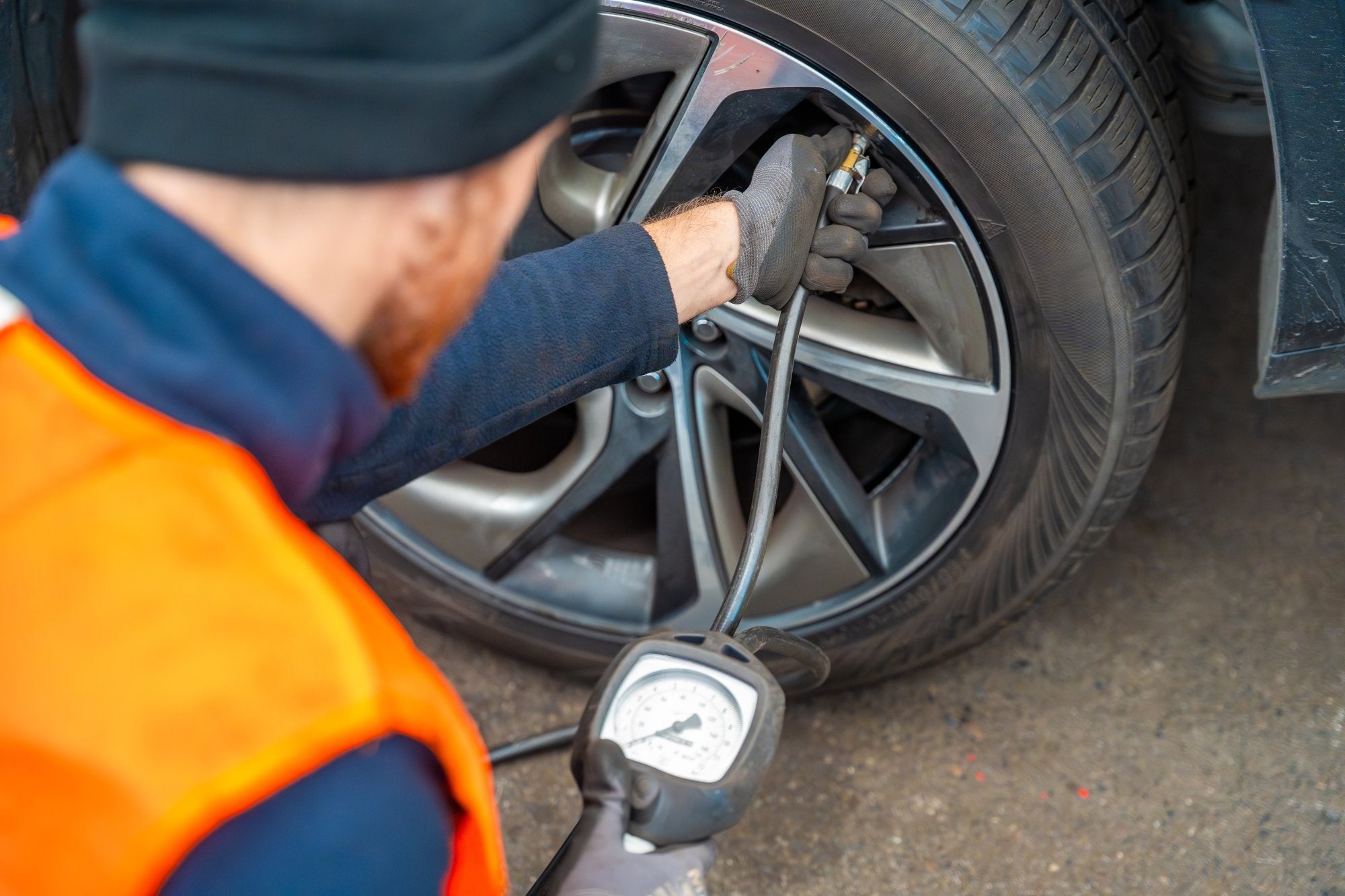
Pressure gets set to the number on your driver's door jamb. The number molded into the sidewall is a maximum, not a target. Techs also look for nails, bulges, cracks, and damaged valve stems, and they'll check the spare if you ask.
Brakes
With a wheel off, or by looking through the spokes, the tech checks pad thickness and the condition of the rotors. They're looking for grooves, heat spots, or a raised lip on the edge. Brake lines and hoses get inspected for cracks or seepage.
This step often comes with a tire rotation. Rotating on schedule evens out wear, and with the wheels already off, it's easy to get a clear look at the brakes.
Step 4: Battery, Belts, and What's Underneath
Under the hood
A battery test measures how well your battery holds and delivers a charge, which tells you more than the fact that it started this morning. Batteries often fail with little warning, especially in cold weather, so treat a weak reading as your cue to plan ahead. Your tech also checks the terminals for corrosion.
Belts and hoses get looked over for cracks, fraying, glazing, and soft or swollen spots. A failed serpentine belt can knock out charging and cooling at the same time, so replace it once wear shows.
Underneath and around
On the lift, your tech scans for leaks, damaged exhaust parts, and worn steering and suspension components like ball joints, tie rod ends, and shocks. If you drive your Jeep or Ram off road or use it to tow, mention that, since both put extra stress on these parts.
Last comes a walk-around of the headlights, brake lights, turn signals, horn, and wiper blades. A streaking wiper or a dead bulb is a small fix that matters a lot on a dark, rainy Long Island night.
Step 5: Read Your Report and Plan Next Steps
Most shops hand you a multipoint inspection report that sorts findings by color. Green means an item is fine. Yellow means keep an eye on it, and red means it needs attention now, either for safety or to prevent bigger damage.
Here's how to use it:
- Ask your advisor to explain any red item and show you the part if possible
- For yellow items, ask roughly how much life is left so you can budget
- Keep your reports, since comparing them shows how fast things are wearing
- Get a written estimate before you approve anything beyond what you came in for
You don't have to approve everything on the spot. Handling safety items now and scheduling the rest later is a sensible plan, and a good advisor will help you sort out what can wait.
Town & Country Jeep Chrysler Dodge Ram offers service and parts support after the purchase. When you're ready for your next visit, book service online and bring your last report along.
Levittown, NY
- Tell your advisor about every noise, smell, or warning light before you hand over the keys.
- Tires, brakes, and the battery are the checks most likely to catch a problem before it strands you.
- Use the color-coded report to handle safety items now and budget for the rest.
FAQ Common questionsHow long does a multipoint inspection add to my visit?Usually not much. The tech does most of these checks while your vehicle is already on the lift for an oil change or rotation. Any extra time mostly comes from talking through the results and deciding what to do about them. Do I have to pay for the inspection?Many dealerships include a multipoint inspection with routine maintenance, but it varies by shop and by the service you're booking. Ask when you schedule so you know what's included before you arrive. Why check for recalls if I never got a notice?Recall letters go to the address on file, which is often out of date if you bought the vehicle used or moved. A VIN lookup catches open recalls no matter who owned the vehicle before, and recall repairs cost you nothing. Should I fix yellow items right away?Not necessarily. Yellow means wear is showing but the part still works. Ask how much life it probably has left, then plan the repair for a future visit so it doesn't turn into a red item at a bad time. |
Ready to get started? Or call (516) 271-3278 · 3156 Hempstead Tpke, Levittown |