




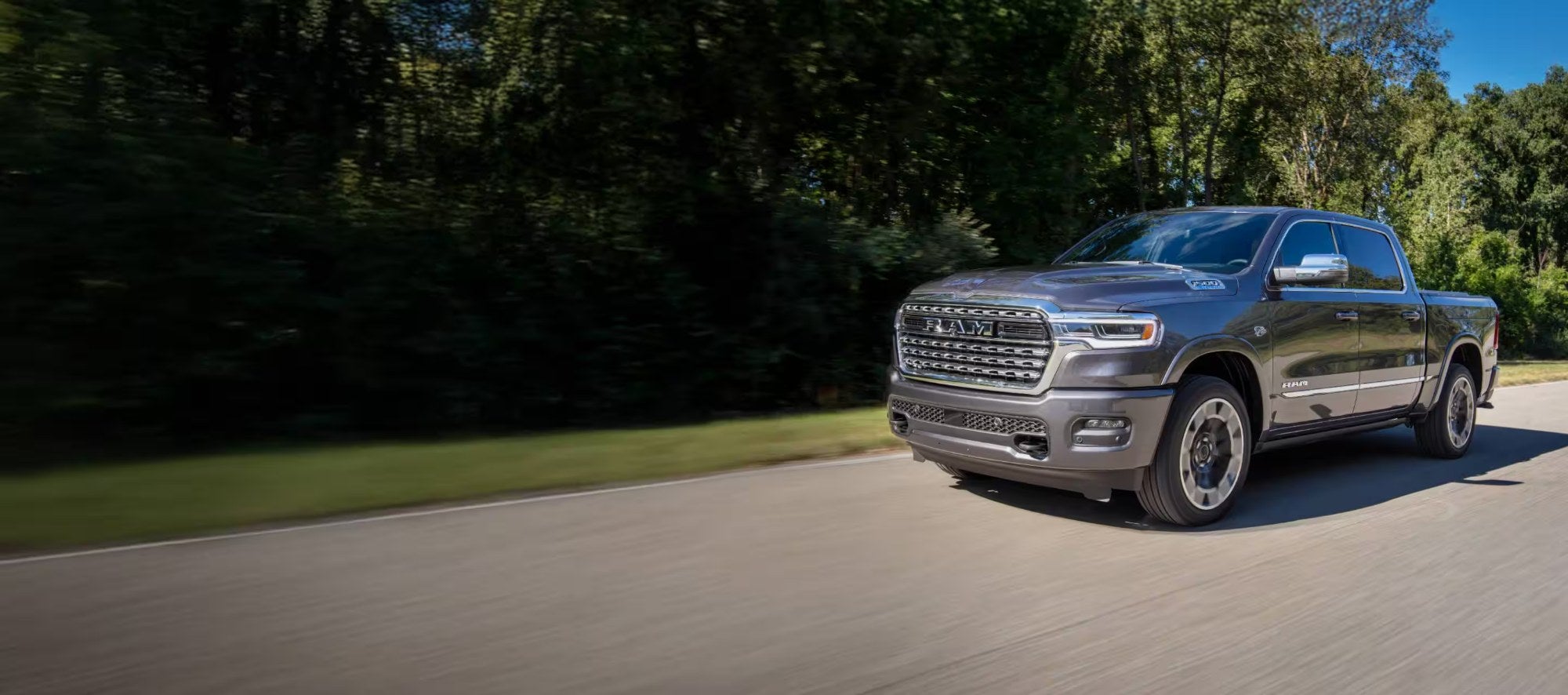
Picking a Ram truck gets easier once you split it into three questions: which cab, which bed, and which engine. At Town & Country Jeep Chrysler Dodge Ram in Levittown, NY, we hear the same handful of questions from shoppers every week, so here are plain answers to each one. Read it through, jot down what matters to you, and you'll walk onto the lot knowing what to look at.
Should I get a Ram 1500 or a 2500/3500?
For most people, the answer is the Ram 1500. It's the half-ton, built for everyday driving with real truck ability behind it: hauling mulch from the garden center, pulling a small boat to a South Shore ramp, or getting a few coworkers to the job site. It rides closer to a big SUV than you might expect, which matters when half your miles are on Hempstead Turnpike.
The Heavy Duty trucks, the 2500 and 3500, are a different tool. They're made for people who tow heavy and often, like a large camper, a car trailer, or a landscaping rig loaded five days a week. You give up some comfort for that muscle: a stiffer ride, a bigger footprint, and higher running costs.
Here's a quick gut check:
- Commuting, weekend projects, light towing: 1500
- Towing something heavy most weekends, or for a living: 2500
- Maximum payload, dual rear wheels, commercial work: 3500
On the fence? Find out what your trailer and gear really weigh before you shop, then compare that against the ratings on the specific truck you're considering. You can browse new Ram trucks in stock to see how the lineup breaks down right now.
Which cab is right for me?

Ram builds several cab styles, though what's offered depends on the model and year:
- Regular Cab: two doors, one row of seats. A favorite for work trucks.
- Quad Cab: four doors with a smaller back seat, fine for kids or the occasional passenger.
- Crew Cab: four full-size doors and a rear seat adults can ride in comfortably. Most families land here.
- Mega Cab: Heavy Duty only, with even more rear legroom.
Think about who rides in back and how often. A roomy rear seat keeps your teenagers from complaining on the way out east, and the back floor doubles as locked, dry storage for tools or groceries.
On Long Island, there's a catch: overall length. A bigger cab usually means a longer truck, and Levittown driveways, mall parking lots and older garages get tight fast. Measure your driveway and garage before you fall for a big cab paired with a long bed.
Your best move is to sit in the back seat yourself, then try parking it somewhere you'd normally park. When you book a test drive, ask to spend a few minutes in a crowded lot, not just on the open road.
What bed length should I pick?

Ram trucks generally come with a shorter bed, a standard bed, or a long bed, and the cab you choose limits which ones are available. Bigger cabs tend to pair with shorter beds to keep the truck from getting unwieldy.
How to decide
Ask yourself what you actually haul. If it's coolers, bikes, bags of soil and the odd piece of furniture, a shorter bed handles it, and the truck is easier to park. If you regularly carry full 4x8 sheets of plywood or drywall flat with the tailgate closed, or you plan to mount a slide-in camper, look hard at a long bed.
A lot of people overbuy here. You can always drop the tailgate for the occasional long load, but you'll live with a longer truck in every parking spot, every day.
Features worth a look
Some Ram 1500 models offer the RamBox storage bins built into the bed rails, which are handy for tools, wet beach gear or a drained cooler. A split, swing-open tailgate on certain trims makes reaching into the bed easier, too.
Bedliners, tonneau covers and tie-down kits make any bed more useful, and our parts department can help you choose ones that fit your truck.
Which engine should I get?

Engine choice comes down to how much you tow and how often. Ram's lineup shifts from year to year, so check what's offered for the model year you're shopping.
Ram 1500
Recent 1500s use the Hurricane twin-turbo six-cylinder, which comes in a standard version and a higher-output version. The standard one suits most commuting and light towing. Opt for the stronger version if you tow regularly or just want quicker merges onto the Southern State. Depending on the year, the familiar HEMI V8 may also be available if you prefer a V8's sound and feel.
Heavy Duty
The 2500 and 3500 offer a gas HEMI V8 or the Cummins turbo-diesel. That diesel is the pick for big, frequent towing. It pulls hard at low speeds and feels relaxed with a heavy trailer behind it.
Diesel isn't free, though. It costs more upfront, needs diesel exhaust fluid, and its emissions system is happiest on longer runs. If your driving is mostly short hops around Nassau County, the gas V8 is often the smarter fit.
Do I need 4x4, and which trim makes sense?
For Long Island, 4x4 is worth it for most buyers. A pickup with an empty bed is light over the rear wheels, and that shows up fast on snowy side streets or a slick, weedy boat ramp at low tide. It also holds its value well when you trade the truck in later. Two-wheel drive can make sense for a work truck that sticks to paved roads and won't see much winter.
Picking a trim
Ram trims run from simple to plush, and names vary by model and year. Roughly:
- Tradesman: work-focused, durable, fewer frills
- Big Horn: the popular middle ground with the comfort features most people want
- Laramie: leather, bigger screens, more driver-assist tech
- Rebel: off-road tuning and tougher looks
- Limited and above: luxury-level interiors
Spend on the things you'll touch every day, like seats, the infotainment screen and safety tech, before paying for looks.
Want a higher trim without new-truck pricing? A certified pre-owned Ram can put you in a nicer truck that's been inspected and comes with extra coverage.
How do I narrow it down and shop smart?
Put your answers together in this order and the choice usually makes itself:
- What you tow and haul (1500 or Heavy Duty)
- Who rides with you (cab)
- Where you park (bed length and overall size)
- How hard you tow (engine)
- Where you drive in winter (4x4)
- What you'll use daily (trim)
Bring that short list in and test-drive two or three trucks back to back. Small differences in ride, seat comfort and visibility stand out when you switch from one truck to the next in the same afternoon.
Got a vehicle to trade? Get a number before you visit using Town & Country's online trade-value tools, so you know where you stand. You can value your trade from home in a few minutes.
If you plan to finance, set a monthly budget first and shop to it rather than the other way around. Approval and rates depend on your credit and the lender, so it helps to talk options through with our team early. And keep in mind that a slightly less loaded truck you're comfortable paying for beats a stretch you'll resent.
Levittown, NY
- Start with what you tow and carry: that decides 1500 versus Heavy Duty before anything else.
- Cab and bed choices set the truck's overall length, so measure your driveway and garage first.
- Test-drive the exact cab, bed and engine combination you're considering, including a tight parking lot.