




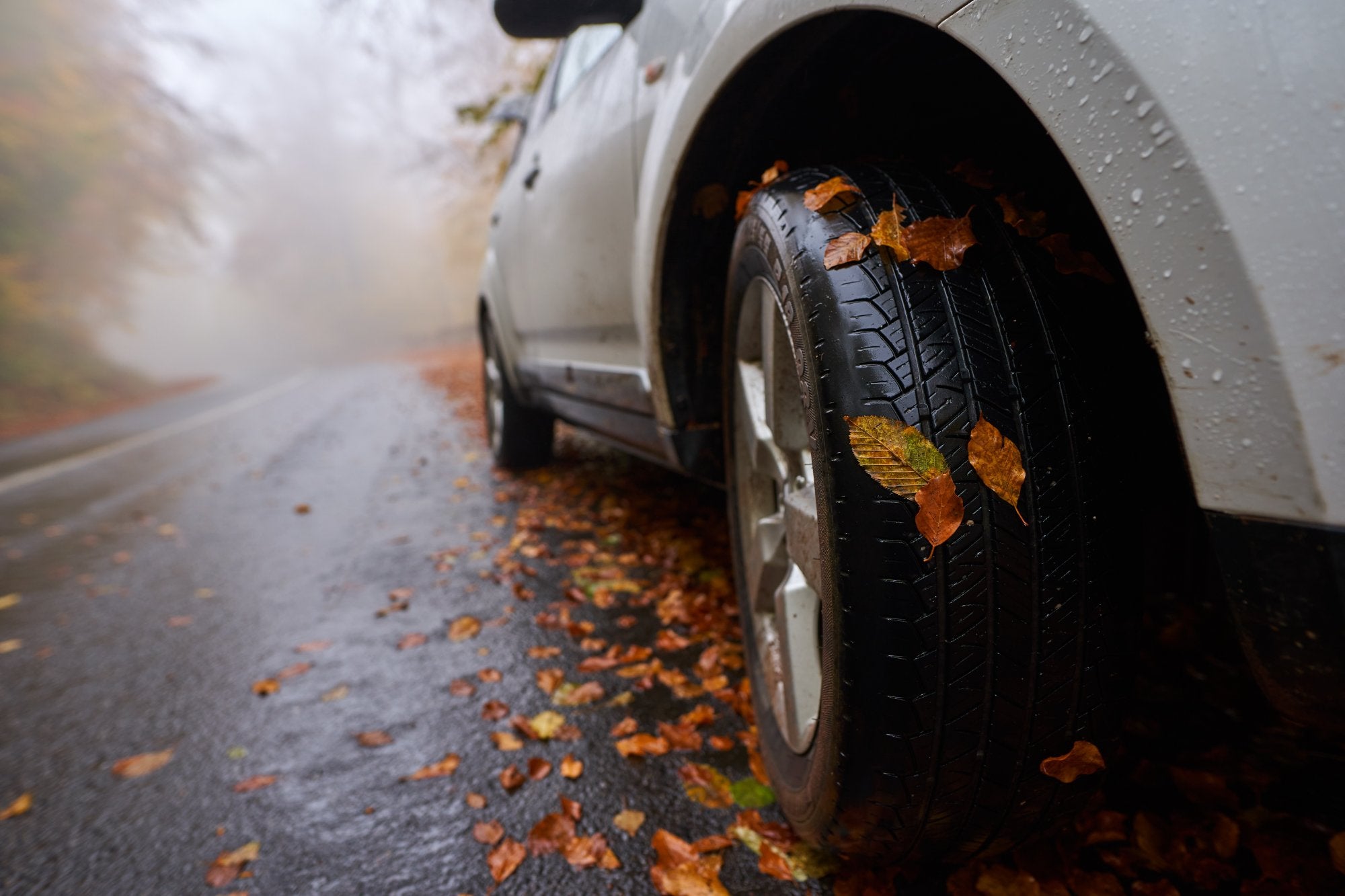
It's a drizzly October morning on a side street off Hempstead Turnpike. The maples dropped a carpet of leaves overnight, and when you tap the brakes at the stop sign, the car keeps rolling a beat longer than you expected. If you drive anywhere in Nassau, Suffolk or Queens, you've probably felt that moment. Here at Town & Country Jeep Chrysler Dodge Ram in Levittown, we hear a few myths about fall driving every year, so let's clear them up.
Myth: Leaves Are Only a Little Slippery
Fact: wet leaves can be almost as slick as black ice. When rain soaks fallen leaves, they mat down into a layer between your tires and the road. Your tires grip the leaves, and the leaves slide on the pavement.
That's why a stop that feels routine in July can turn into a slow, nervous skid in October. It happens most on shaded streets, under big trees, and at corners where leaves pile up against the curb.
What leaves hide
Slickness is only half the problem. A blanket of leaves can cover:
- Potholes and broken pavement edges
- Painted lane lines and crosswalks
- Standing water from storm drains the leaves have clogged
Treat any leaf-covered patch like it might be hiding something, and ease off before you roll over it.
Myth: ABS and 4x4 Mean I Can Brake Later
Plenty of Jeep and Ram owners feel unstoppable once the leaves start falling, and we get it. Four-wheel drive helps you get moving, not stop. Once you're braking, any vehicle depends on one thing: how much grip its tires have on the surface underneath.
Anti-lock brakes are a real safety feature, but they work differently than most people think. ABS keeps the wheels from locking so you can still steer while braking hard. On something as slick as wet leaves, it won't necessarily shorten your stop, and it can even lengthen it.
What actually helps
- Leave more room behind the car ahead than you would on dry pavement
- Start braking earlier and press the pedal smoothly
- If ABS kicks in, you'll feel pulsing, so keep firm pressure and steer where you want to go
- Take turns slower, since braking and cornering on leaves at once is where skids start
Myth: If My Tires Hold Air, They're Fine
Pressure matters, but tread depth is what pushes water out of the way so the rubber can actually touch the road. Worn tires skate over wet leaves and puddles much sooner than healthy ones.
Try the penny test at home. Slip a penny into a tread groove with Lincoln's head pointing down. If you can see the top of his head, the tread is getting thin, and it's time to talk about replacements.
Check pressure once the mornings turn cold, since cooler air lowers it, and an underinflated tire grips and steers worse. While you're down there, look for sidewall cracks or uneven wear, which can point to an alignment issue.
Give your wipers a look too. Streaky blades make a leafy road harder to read in the rain, and fresh blades from our parts department are an easy fix.
Myth: Brakes Only Need a Look When They Squeal
By the time brakes squeal, they may already be overdue. Many pads have a small wear indicator that makes noise near the end of their life, but other warning signs show up quietly.
Signs to watch for
- A grinding or scraping sound
- A pedal that feels soft or sinks lower than usual
- Pulsing during normal, gentle stops
- The vehicle pulling to one side when you brake
A light orange film on the rotors after a rainy night is usually just surface rust, and it wears off after a few stops. Anything on that list deserves attention.
What to do next
Fall is a smart time for a check, before the leaves and the first icy mornings arrive. As a full-service Chrysler, Dodge, Jeep and Ram dealership in Levittown, we can look at your brakes, tires and wipers during one visit. When you book a service visit, ask us about clearing leaves from the drains under your windshield, too.
Levittown, NY
- Treat wet, matted leaves like a patch of ice, and assume they're hiding something underneath.
- ABS and four-wheel drive don't add grip when you're stopping. Distance and early, smooth braking do.
- A quick fall check of tread, tire pressure, wipers and brakes goes a long way on slick roads.
FAQ Common questionsAre dry leaves safe to drive over?They're less slippery than wet ones, but they can still slide, and they hide the same potholes and debris. Avoid parking on a dry pile, too. A hot exhaust system underneath can ignite leaves. Should I ever drive through a big pile of leaves?It's best to go around. Kids love playing in leaf piles, and a pile can hide rocks, branches or a deep pothole. If you can't avoid one, slow way down first. Do I need winter tires just for fall leaves?Usually not. A good set of all-season tires with healthy tread and the right pressure handles fall roads well if you drive for the conditions. Winter tires matter more once cold temperatures and snow settle in. |
Want to see it in person? Come by for a test drive, or browse what is on the lot right now. Or call (516) 271-3278 · 3156 Hempstead Tpke, Levittown |