



Town & Country Jeep Chrysler Dodge Ram

Blog / Chrysler

Is the Jeep Compass Big Enough for Your Levittown Family?

2026 Jeep Compass front three-quarter exterior
THE SHORT ANSWER
For most Levittown families of three or four, yes. The 2027 Jeep Compass handles one or two car seats, a stroller, groceries and beach gear well, and it's easy to park around town. If you need three across the back seat or a third row, a Grand Cherokee or a Pacifica minivan is the better fit.

Car seats, a stroller, hockey bags, a cooler for Jones Beach: Levittown families ask a lot of one vehicle. At Town & Country Jeep Chrysler Dodge Ram, parents often ask whether the 2027 Jeep Compass can really carry all of it or whether they'll outgrow it in a year. Here's where it fits, where it runs short, and how to tell for your own family before you buy.

Who the Compass Fits Best

The Compass is Jeep's compact SUV. It has two rows and no third row, and it's small enough to slide into a Levittown driveway or a packed shopping center lot without a fight. For a lot of households, that's exactly the right size.

It tends to suit:

  • Couples with one child, or two kids still in car seats
  • Families with one teen and one younger child
  • Parents who want something easier to handle than a midsize SUV for daily errands
  • Households where a second, larger vehicle covers the big trips

Things get tight with three kids across the back seat, especially when two of them ride in car seats. A compact SUV's rear bench isn't wide enough for most families to make that work comfortably day after day.

So the straight answer is that the Compass is big enough for a family of three or four for most of what Long Island throws at you. Once a third child or a regular carpool enters the picture, a bigger Jeep or a minivan starts earning its keep.

Car Seats and the Back Seat

2026 Jeep Compass dashboard

Little ones in car seats

Rear-facing infant seats take the most room because they reach into the space behind the front seat. Seat brands vary a lot in width and depth, so the fit you get with your own seats matters more than any brochure.

When you try it, watch for:

  • How far the front passenger seat has to slide forward with a rear-facing seat behind it
  • Whether you can reach the anchor points without wrestling the cushion
  • How easily you can lift a child in and buckle them without bumping their head
  • Whether a car seat and a booster still leave usable space in the middle

Bigger kids and teens

Once kids are out of car seats, the question becomes knees and legroom. Put your tallest teen behind the tallest driver in the family and ride along Hempstead Turnpike in stop-and-go traffic. A short real-world ride tells you more than any measurement.

When you book a test drive, tell us you're bringing car seats. We'll leave time to install them and let everyone sit in back before anyone turns the key.

Cargo Space in Real Life

Every 2027 Compass trim gives you 27.2 cubic feet of cargo space. That number is hard to picture, so think about what you actually carry.

On a normal week, it handles:

  • A full-size stroller plus a grocery run
  • Lacrosse or hockey bags for one or two kids
  • A beach cart, umbrella and cooler for a Jones Beach afternoon
  • Bags for a long weekend, as long as everyone packs sensibly

Trouble starts when you stack several of those at once. A stroller, a pack-and-play and a week of suitcases for a trip upstate will fill it quickly. At that point families start looking at a roof carrier or a bigger vehicle.

Folding the rear seat opens up far more room for a furniture pickup or a garden center haul. Folded seats and kids in the back don't mix, though, so plan around your heaviest regular load rather than the once-a-year one. If the weekly routine fits with room to spare, the occasional big trip can be solved with a little creativity.

A Levittown Week Behind the Wheel

2026 Jeep Compass side exterior

Size isn't only about the cargo area. It's also about how a vehicle handles the way you drive, and around here that means crowded lots, school pickup lines and plenty of parkway miles.

A compact SUV shines in tight spots along Hempstead Turnpike and at drop-off, where everyone is jockeying for the curb. You'll thread through traffic and park on narrow side streets more easily than in a midsize SUV, and that matters on days with four or five stops.

Fuel use adds up when you're shuttling kids all week. The Compass is rated at 23 mpg city and 31 mpg highway, so errands around town land closer to the first number, while runs on the Wantagh Parkway or Southern State pull you toward the second.

Four-wheel drive comes standard across the lineup. It helps you get moving on slushy mornings and unplowed side streets after a nor'easter, but it won't help you stop on ice, so tires still matter. Before winter, book service for a tire and brake check while you're thinking about it.

Choosing Among the Trims

2026 Jeep Compass rear three-quarter exterior

The 2027 Compass comes as Latitude, Latitude Altitude, Limited, Limited Altitude and Trailhawk. None of them is bigger than another. Cargo room and four-wheel drive stay the same from top to bottom.

Power doesn't change either: a 2-liter four-cylinder making 200 horsepower sits under the hood of every version. That's enough to merge onto the Northern State with a full car without feeling strained.

So you're choosing on features and personality, not space:

  • Latitude: the sensible starting point for value-minded families
  • Latitude Altitude: the Latitude with a sportier, darker look
  • Limited: a step up in comfort and interior finish
  • Limited Altitude: Limited comfort paired with Altitude styling
  • Trailhawk: built with off-road use in mind, with an MSRP of $34,650

For most families, the choice comes down to how much comfort you want on daily drives and whether off-road ability matters to you at all. Browse our new Compass inventory to see which trims are on the lot, and we'll walk you through what each one adds.

When It's Time to Size Up

Some families outgrow a compact SUV before they even sign. Think about the next few years, not just this one.

Look at something bigger if:

  • You have three kids, or a third is on the way
  • You regularly carpool other people's children
  • A large dog rides in back alongside sports gear
  • Grandparents join you often and need easy entry
  • Long road trips with a full load are a regular thing

Jeep, Chrysler, Dodge and Ram all share our Levittown showroom, so comparing takes one stop. A Jeep Grand Cherokee gives you a larger SUV with more room inside. A Chrysler Pacifica minivan adds sliding doors and three rows, which parents of small children tend to love once they try buckling a toddler in a tight parking spot.

Sit in the Compass and a larger option on the same visit. The difference is obvious within minutes, and you'll know which tradeoff you'd rather live with: easier parking and lower running costs, or more space. Contact us ahead of time and we'll have both ready.

New, Used or Certified Pre-Owned

Town & Country Jeep Chrysler Dodge Ram sells new, used and Certified Pre-Owned vehicles. That gives you options for matching a Compass to your budget without giving up the size that works for your family.

A new Compass lets you pick the exact trim and color you want. A used one can stretch your budget further, which some families put toward a roof carrier or a set of winter tires. Certified Pre-Owned sits between the two, with an inspection process and coverage that can make a used purchase feel less like a gamble. You can browse our Certified Pre-Owned vehicles to see what's available.

If you're shopping older model years, test-fit them the same way you would a new one. Features and interior layouts can change from year to year, so bring the car seats and gear along no matter what you're looking at.

On financing, terms depend on your credit history and the lender. We'll go over the options with you openly, but no one can promise an approval or a rate before the lender reviews your application.

Your Test-Fit Checklist

The best way to answer the size question is to load the Compass the way you would on a normal day. Bring the real stuff, not your best guess.

What to bring

  • Every car seat and booster you use now
  • Your stroller, folded the way you fold it at the store
  • The biggest sports bag or beach cart in the house
  • Your tallest kid, to sit behind the tallest driver

What to try

  • Install the seats and buckle a child in with the door at a normal parking-lot angle
  • Load the stroller with a few grocery bags beside it
  • Drive part of your real commute, including a stretch of parkway
  • Park it in a tight spot and back out using the mirrors and camera

If everything fits with a little room to spare, you've likely found your answer. If you're already stacking things to close the liftgate, size up now rather than in two years.

We also have online trade-value tools, so you can value your trade before you come in and arrive knowing where your budget stands.

Where
3156 Hempstead Tpke
Levittown, NY
KEY TAKEAWAYS
  • The Compass works best for families of three or four, especially with one or two car seats.
  • Every trim shares the same engine, cargo room and four-wheel drive, so choose on features and comfort.
  • Bring your own car seats, stroller and gear to a test drive before you decide.
FAQ

Common questions

Can three car seats fit across the back of a Compass?

For most families, that's too tight in a compact SUV. Seat widths vary, so if you're hoping to make it work, bring all three seats and try them in person before deciding.

Is the Trailhawk worth it if we never go off-road?

Probably not for a family that sticks to Long Island roads. You get the same interior space in every trim, so a Latitude or Limited usually makes more sense unless you plan on trails or simply love the Trailhawk's look.

Will a double stroller fit in the cargo area?

It depends heavily on the stroller. Some compact double strollers fold small enough, while wide side-by-side models can take up most of the space. Bring yours and load it alongside a couple of grocery bags to see how it works.

Can I check my trade-in value before visiting?

Yes. Town & Country Jeep Chrysler Dodge Ram has online trade-value tools, so you can get a starting point at home and then have us confirm it in person.

How long should we plan for a family test drive?

Give yourself extra time beyond a normal drive. Installing car seats, loading gear and letting everyone sit in back takes a while, and rushing it defeats the purpose.
Want to see it in person?
Come by for a test drive, or browse what is on the lot right now.
Or call (516) 271-3278 · 3156 Hempstead Tpke, Levittown
Posted in:

Related Posts

Understanding the Dodge Charger Daytona's Electric Performance

Understanding the Dodge Charger Daytona's Electric Performance

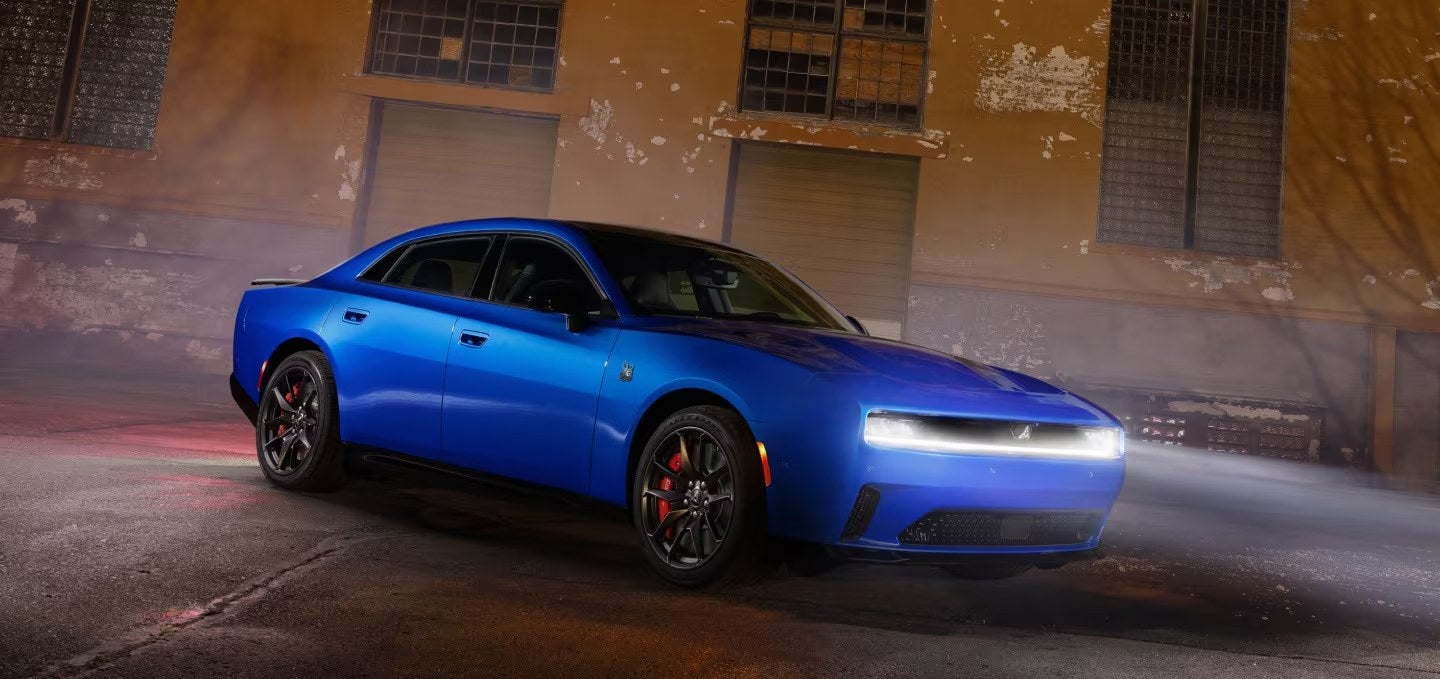
THE SHORT ANSWER The Charger Daytona swaps the V8 for dual electric motors, so power arrives instantly, and all-wheel drive helps put it on the road. Dodge kept the muscle-car character with eRupt simulated shifting, the Fratzonic Chambered Exhaust sound, and Direct Connection performance upgrades. It feels quicker and more composed than the old car, but different in spirit, so a back-to-back drive is the best way to judge it. Here's a tip worth more than any spec sheet: on your first Charger Daytona drive, ease onto the throttle from a stop before you try a hard launch, because the electric punch shows up so fast it catches V8 drivers off guard. At Town & Country Jeep Chrysler Dodge Ram in Levittown, we sell both the gas Charger and the electric Daytona. The question we hear most is simple: what does the electric one actually feel like? Here's how it works, piece by piece, in plain English. IN THIS POST Why electric power feels different How the dual-motor setup makes power What eRupt simulated shifting feels like The Fratzonic exhaust: sound on purpose Direct Connection performance packages explained How it compares to the outgoing V8 feel Charging considerations for daily driving What to do next Key takeaways Why electric power feels different A gas engine has to build revs before it makes its best pull. You press the pedal, the engine spins up, the transmission picks a gear, and the shove grows from there. That buildup is a big part of the drama people love about a V8. An electric motor skips the warm-up. It makes strong torque from a standstill, so the moment your foot moves, the car moves. You never wait for the tach to climb or for a downshift before a pass. You'll notice that in everyday spots more than at a drag strip: Pulling out of a side street onto Hempstead Turnpike when the gap is tight Merging onto the Wantagh or Southern State from a short ramp Passing a slow truck on the LIE without planning it several seconds ahead It also changes how you drive smoothly. Because response is so direct, a heavy right foot in stop-and-go traffic can feel jerky. Most new owners settle into a lighter touch within a week or so. After that, the car stays calm until you ask for more. How the dual-motor setup makes power The Daytona uses two electric motors, one at each axle. That gives you all-wheel drive without a long driveshaft running front to back like a traditional AWD system needs. Software decides many times a second how much power goes to each end of the car. Why should you care? Splitting the work between front and rear wheels lets the car put its power down without spinning the rear tires every time you get eager. On a wet morning in Levittown, or on a cold day when the pavement is slick, that's the difference between a clean launch and a sideways wiggle. Where the battery fits in A large battery pack sits low in the floor between the axles. Keeping that mass down low lowers the center of gravity, which helps the car feel planted through quick direction changes like a tight cloverleaf ramp. You'll feel the battery's weight too, as a solid, heavy-footed ride rather than a light, darty one. Depending on trim, Dodge adds tools like a push-button power boost and launch control, and we can point out which ones a given car in our new inventory has. What eRupt simulated shifting feels like Most electric cars use a single-speed drive, so acceleration is one long, smooth surge. Dodge went another way. The eRupt multi-speed transmission simulates gear changes, briefly easing and then reapplying power so you feel a shift, the same rhythm you'd get from an automatic in a gas muscle car. No real gearbox is swapping gears here. Software shapes the motor output to mimic that feel. So the effect is about character rather than efficiency, and you get some say in how much of it you want. Here's how it tends to play out: In calmer drive modes, you get the smooth, uninterrupted pull most EVs have. In sportier modes, the simulated shifts come in, giving acceleration a stepped, punchy cadence. You can change modes as you go, so a commute stays mellow and a weekend drive gets the full effect. Some drivers love it right away because it brings back that sense of a car working through its gears. Others treat it as a novelty and leave it off for the daily grind. Try both ways on your drive, because your preference here is personal and there's no wrong answer. The Fratzonic exhaust: sound on purpose Silence is the first thing people notice in most EVs. Dodge decided a Charger shouldn't be quiet, so the Daytona gets the Fratzonic Chambered Exhaust. Nothing is burning back there. A speaker-and-chamber system pushes a deep, engineered sound out the rear, tied to how hard you're accelerating. The point is feedback. In a V8, sound tells you how hard the car is working, and without it, speed can sneak up on you. Fratzonic rises and falls with your throttle, so your ears stay part of the driving experience. What it sounds like in real life It isn't a recording of a Hemi, and it doesn't pretend to be. Expect something bold and a little sci-fi, loud enough that people on the sidewalk turn their heads. Volume and character shift with drive modes, so you can keep things civil pulling into your driveway at night and turn it up when you want the show. If sound was a big reason you loved the old Charger, give it extra attention on your drive. Have someone pull away while you listen from outside too, since that's how your neighbors will hear it. Direct Connection performance packages explained Direct Connection is Dodge's in-house performance parts brand, a name with deep roots in Mopar drag racing. With the Daytona, it takes a new form: performance upgrades that unlock more output from the electric motors, offered in stages. Rather than bolting on a new intake or cam, an electric upgrade is largely calibration. So the car you buy can have room to grow, and moving up a stage doesn't mean tearing into the drivetrain. A few practical points before you count on one: What's available depends on the trim you start with, so choose your car with the upgrade in mind. Ask how a given stage affects warranty coverage before you buy it. Have installation and programming done by a dealer that knows the platform. That last point is where we fit in. Town & Country offers service and parts support after the purchase, so if you add a Direct Connection kit later, you have a place to sort out the details. Our advisors can tell you which stages suit your trim, and you can order through our parts team when you're ready. How it compares to the outgoing V8 feel Here's the honest version. Coming out of a Hemi Charger, you'll find the Daytona quicker off the line and more composed, but different in spirit. What you gain Response is immediate at any speed, with no waiting for a downshift. All-wheel drive helps on wet Long Island roads in a way a rear-drive V8 never could. Around town it's quieter and smoother, and you skip the gas station on the way to work. What changes A V8 builds. It rumbles at idle, gets louder and angrier as revs climb, and rewards you for winding it out. With the Daytona, most of the drama lands right away, and its sound, while bold, comes from a different place. Extra weight shows up in tight corners and over rough pavement. Plenty of longtime muscle-car fans find their first drive surprising in a good way. Others still prefer the old feel, and that's fair. Since we sell both, you can book a test drive in each one back to back and trust your own seat-of-the-pants judgment. Charging considerations for daily driving Owning an EV is easiest when you can charge where you sleep. If you have a garage or driveway in Levittown, a Level 2 home charger is the setup most owners land on. Plug in at night, wake up with the range you need, and you rarely think about it. A regular household outlet works in a pinch, but it's slow, better for topping off than refilling. Installing a Level 2 unit usually takes a licensed electrician and sometimes a panel upgrade, so get a quote before you take delivery. If you don't have a driveway Apartments and condos make things trickier. Look at what's near your job, your grocery store or your gym, and ask whether your building plans to add chargers. DC fast charging along the highways is great for road trips, but leaning on it daily costs more and takes planning. Driving style and weather Two things drain range faster than people expect: hard launches and cold weather. Enjoying that instant torque uses more energy, and a January morning on Long Island takes its own bite. Preconditioning the cabin while plugged in helps, and charging soon becomes routine. What to do next If the Daytona sounds like your kind of car, the best next step is seat time. Reading about torque and simulated shifts only gets you so far. A simple plan for your visit: Ask for a route with a real highway merge, not just local streets. Try a gentle start and a hard one, in both a calm mode and a sport mode. Listen to Fratzonic from inside and outside the car. Ask about Direct Connection stages for the trim you're eyeing. Bring a rough idea of where you'd charge. Running the numbers Before you come in, our payment calculators and shopping tools can show you what a monthly payment might look like, and you can explore financing options ahead of time. Approval and terms depend on your credit and the lender, so treat any estimate as a starting point. Trading in your current car? Get a value first so you know where you stand. It's also worth browsing what we've collected as "Only at TC Jeep" for the dealership-specific reasons people choose to buy here. Then stop by Town & Country Jeep Chrysler Dodge Ram in Levittown and take one out. Where 3156 Hempstead Tpke Levittown, NY Call (516) 271-3278 KEY TAKEAWAYS Electric motors pull hard from a standstill, so the Daytona's punch comes the moment you press the pedal instead of building with revs. eRupt shifting and Fratzonic sound are there to keep the car feeling like a Charger, and you can dial them up or down to suit your mood. Daily life with a Daytona is easiest with home charging, so sort out where you'll plug in before you buy. FAQ Common questions Does the Charger Daytona need oil changes? No engine oil changes, since there's no engine. It still needs regular care like tire rotations, brake checks, cabin air filters and fluid service on its own schedule, and our service team can walk you through what that looks like. How does the Daytona handle Long Island winters? Dual motors give it all-wheel drive, which helps on wet or slick roads, especially with good winter tires. Cold weather does reduce range, so plan on charging a bit more often in January and use preconditioning while the car is plugged in. Can I turn the Fratzonic sound down? Yes, the sound changes with drive modes, so you can keep it calmer for late-night arrivals and turn it up when you want the full effect. Try the different modes on your test drive to hear the range for yourself. Want to see it in person? Come by for a test drive, or browse what is on the lot right now. Schedule a test drive Browse new inventory Or call (516) 271-3278 · 3156 Hempstead Tpke, Levittown Or keep browsing Current offers Financing Value your trade Book service Contact us Used cars

Owner Tips for Getting the Most Electric-Only Miles from Your Jeep Wrangler 4xe This Fall

Owner Tips for Getting the Most Electric-Only Miles from Your Jeep Wrangler 4xe This Fall

THE SHORT ANSWER Charge fully before short trips, use Electric mode around town, and warm the cabin while the Jeep is still plugged in. Those three habits help your Wrangler 4xe cover more miles on electricity alone as the weather cools. Why does your Wrangler 4xe seem to run out of electric miles sooner now that the mornings are cold? You're not imagining it, and you're not alone. It's one of the most common questions 4xe owners bring to the service desk at Town & Country Jeep Chrysler Dodge Ram in Levittown this time of year. Most of the fix comes down to habits, and you can start them tomorrow morning. IN THIS POST Why Cold Weather Cuts Electric Range Charging Habits That Help Choosing the Right Drive Mode Preconditioning Before You Leave When Hybrid Mode Makes More Sense What to Do This Week Key takeaways Why Cold Weather Cuts Electric Range Lithium-ion batteries are a lot like you on a cold morning. They're slow to get going. When the pack is chilly, the chemistry inside moves less freely, so it can't hand over as much usable energy as it did in September. Heat is the second hit. A gas engine makes warmth as a byproduct, but in Electric mode your cabin heat has to come from the battery. Run the heater full blast down Hempstead Turnpike, and that energy isn't going to the wheels. Most owners don't expect the third piece. On a really cold day, the 4xe may start the gas engine even when you've picked Electric mode, either to protect the battery or to warm the cabin. That's normal behavior, not a fault, and it usually settles down as temperatures climb. A few smaller things stack on top: Tire pressure drops as the air cools, which adds rolling resistance Cold, dense air creates a little more drag at highway speed Short hops never give the battery a chance to warm up None of this means something's wrong with your Jeep. It's physics. You can work around most of it with habits instead of hardware. Charging Habits That Help Top off before short trips The easiest win is to plug in every time you're home, even if you only ran to the library and back. Think of electric range as a daily allowance. If you start each morning full, your errands around town run on the battery instead of the engine. A standard household outlet works fine if the Jeep sits overnight. A Level 2 charger at home cuts the wait way down, which helps in the fall when you're making two or three trips a day and want to top off at lunch. Charge so you leave warm Timing matters more once it gets cold. A battery that just finished charging is a bit warmer than one that sat full all night in a chilly driveway. Use scheduled charging in Uconnect so the battery finishes close to when you usually head out. A few more habits: Park in the garage when you can, because a warmer pack holds up better Keep the charge port and connector clear of leaves and grit Plug in at public chargers when you're parked for a while anyway If your charge cord is damaged or you want a second one for work, our parts department can track down the right one. Choosing the Right Drive Mode Your 4xe has three drive modes. Picking the right one for each trip is where a lot of owners leave electric miles on the table. Electric uses the battery first and keeps the engine off as much as it can Hybrid blends both and lets the system decide eSave holds your battery charge for later, or uses the engine to add some back Around town, Electric is the move. Stop-and-go driving on Wantagh Avenue or through a crowded shopping center lot is where electric power is most efficient and the gas engine is least happy. Then there's Max Regen. Press that button and the Jeep slows down more strongly when you lift off the accelerator, sending more energy back into the battery. After a few days you'll barely touch the brake pedal in traffic, and coasting up to a red light puts a little charge back. Smooth driving helps in any mode. Quick launches and hard stops drain charge fast. Ease off early and roll up to lights, and the system recovers that energy instead of wasting it as brake heat. Preconditioning Before You Leave If you change only one thing this fall, make it this: warm the cabin while the Jeep is still plugged in. Preconditioning uses wall power to heat the interior and clear the glass. You pull out of the driveway comfortable, with the battery still full, instead of burning your first few miles of charge on heat. How to do it Start it from the Uconnect app on your phone, or set it up in the vehicle's settings. Give the cabin a little time to come up to temperature before you head out. Keep the cord connected the whole time, since that's the point. Heat the person, not the cabin Once you're rolling, heated seats and a heated steering wheel, if your Jeep has them, warm you directly. They use far less energy than blowing hot air around the whole interior. Plenty of owners set the climate a bit lower and lean on seat heat instead. A couple more cabin tips: Run the fan on a moderate setting rather than max Switch to recirculation once the windows are clear On a soft top, a snug fit and healthy seals hold warmth in Preconditioning won't fully fix a pack that sat outside all night in the cold. Still, it cuts down a lot on the energy you'd otherwise spend on heat once you're driving. When Hybrid Mode Makes More Sense Chasing electric miles is fun, but it isn't always the smartest play. Sometimes letting the engine help works out better for you and for the Jeep. Highway runs are the big one. Cruising at speed on the LIE or the Southern State drains battery charge quickly, and that's exactly where gas is relatively efficient. On a mixed trip, like highway miles out east followed by errands once you arrive, try eSave on the highway to hold your charge. Switch to Electric when you hit local streets so the battery goes where it does the most good. Hybrid also makes sense when: It's bitterly cold and the engine is going to run anyway You're towing or heading off-road and want full combined power You can't charge at your destination and want a cushion for the trip home Don't stress about burning some gas. The 4xe was built to switch between both, and running the engine now and then is good for it. Fuel that sits too long can go stale. If you've driven a long stretch on electric only, the Jeep has a refresh routine that may run the engine on its own. What to Do This Week Here's a short checklist to work through before the next cold snap: Check tire pressure on a cool morning and set it to the number on the driver's door jamb Set up scheduled charging to finish near your usual departure time Turn on preconditioning in the app and try it tomorrow Use Max Regen for a week of commuting and see how it feels Plan on Electric for town and eSave for highway stretches When it's worth a look If something still feels off after a week of these habits, have it checked. A range drop that seems bigger than the weather explains, a charge that keeps stopping short, or warning messages on the dash are all good reasons to book a service visit. Our technicians can check battery health, inspect the charging system and make sure your software is current, so you're not left guessing. Town & Country Jeep Chrysler Dodge Ram serves Nassau, Suffolk and Queens, so wherever your commute takes you, help isn't far off. Bring your questions along, and we'll walk you through what we find. Where 3156 Hempstead Tpke Levittown, NY Call (516) 271-3278 KEY TAKEAWAYS Plug in every time you're home, and time charging to finish close to when you leave. Use Electric mode and Max Regen in town, and save battery with eSave on the highway. Precondition on wall power and lean on seat heat instead of blasting the cabin heater. FAQ Common questions Is it normal for the gas engine to run in Electric mode when it's cold? Yes. In very cold weather, the 4xe may start the engine to protect the battery or help heat the cabin, even if you've chosen Electric mode. It usually stops happening as temperatures rise. Should I plug in after every trip, even short ones? For everyday driving, yes. Starting each trip with a full battery gives you the most electric miles for local errands. Check your owner's manual for any specific charging guidance for your model year. Does preconditioning help if the Jeep isn't plugged in? It'll still warm the cabin, but it pulls that energy from the battery, which works against the goal. You get the full benefit only when the Jeep is connected to a charger while it warms up. Will my electric range come back in the spring? In most cases, yes. The fall and winter drop comes mostly from temperature, so range typically recovers as the weather warms. If it doesn't, that's worth a service check. Do I need a Level 2 charger at home? No. A standard outlet will charge the 4xe overnight. A Level 2 charger is a nice upgrade if you make several trips a day or want to top off quickly between them. Want to see it in person? Come by for a test drive, or browse what is on the lot right now. Schedule a test drive Browse new inventory Or call (516) 271-3278 · 3156 Hempstead Tpke, Levittown Or keep browsing Current offers Financing Value your trade Book service Contact us Used cars

Myth vs Fact: Does 4WD Really Mean You Can Tow Anything in Winter Weather?

Myth vs Fact: Does 4WD Really Mean You Can Tow Anything in Winter Weather?

THE SHORT ANSWER No. Four-wheel drive helps your truck find traction and get a trailer moving on snow or ice, but it does nothing to shorten stopping distances or keep that trailer from swaying. Winter towing still calls for lower speeds, much more following distance and a careful cold-weather check before you hook up. Does four-wheel drive mean your truck can pull a trailer through anything winter throws at Long Island? It's one of the most common questions truck owners bring to Town & Country Jeep Chrysler Dodge Ram in Levittown once the first cold snap hits. The honest answer is no, and knowing why can keep you, your rig and the people around you safe all season. IN THIS POST Myth: 4WD Gets You Through Anything (What It Actually Changes) Myth: More Traction Means More Control (What It Doesn't Change) Myth: A Heavy Truck Stops Fine on Its Own (Braking With a Trailer) Myth: The Speed Limit Is a Safe Speed (Winter Towing Speeds) Myth: A Quick Walk-Around Is Enough (Pre-Trip Checks for Cold-Weather Towing) Myth: You Can Sort It Out Once It Snows (What to Do Next) Key takeaways Myth: 4WD Gets You Through Anything (What It Actually Changes) Fact: four-wheel drive is about getting power to the ground. When you shift into 4WD, the transfer case sends engine torque to the front axle as well as the rear, so all four tires share the job of pushing. On a snowy boat ramp, an unplowed driveway or a slushy on-ramp to the Long Island Expressway, that's a real advantage. A rear-drive truck with a loaded trailer can spin its back tires and go nowhere. With 4WD engaged, you have a far better chance of rolling forward smoothly and holding your momentum up an icy grade, where the trailer's weight is working against you. Using it the right way Many heavy-duty trucks, the Ram 2500 among them, offer a part-time system with high and low ranges. A few habits make it work for you: Use 4HI on snow, slush or ice at normal road speeds. Save 4LO for crawling, like pulling a boat up a slick ramp or backing a trailer out of deep snow. Shift back to 2WD on dry, clear pavement, since part-time systems can bind and wear when the tires can't slip. Your owner's manual spells out the exact shifting procedure for your truck, including when you need to be stopped or rolling slowly. Myth: More Traction Means More Control (What It Doesn't Change) Fact: grip to accelerate is not the same as grip to turn or stop. Your tires have only so much hold on a slick road, and 4WD doesn't create more of it. It simply spreads the engine's push across more tires. Once you lift off the gas and need to steer or slow down, a 4WD truck has the same rubber on the same ice as a 2WD one. That's where false confidence creeps in. Because the truck pulls away so easily, it feels planted, and drivers carry more speed than the road can support. Trouble usually shows up in a curve or a lane change, when it's too late to fix. Trailer sway is its own problem A trailer that starts to wag behind you is reacting to speed, crosswinds, passing trucks and how its load is placed. Four-wheel drive has no influence on any of that. What helps: Loading so a healthy share of the weight sits ahead of the trailer axle, never behind it. A weight-distributing hitch with sway control for larger trailers. Easing off the throttle and steering smoothly if sway starts, then using the brake controller's manual lever to apply the trailer brakes alone and pull it back in line. The Ram 2500 adds electronic trailer-sway control, which is a smart backup. Good loading and sensible speed still do most of the work. Myth: A Heavy Truck Stops Fine on Its Own (Braking With a Trailer) Fact: your brakes were never part of the 4WD system. Any vehicle on the road brakes with all four wheels, so engaging four-wheel drive adds nothing when you press the pedal. Hook up a loaded trailer and the total weight you're trying to stop climbs sharply, while the grip available on ice stays exactly where it was. Here's the physics in plain terms: more mass needs more distance to stop, and less grip needs more distance still. Put both together on a freezing night on Sunrise Highway and your stopping distance can stretch well beyond anything you're used to. Making the brakes you have work better Set your brake controller gain for the conditions. A setting that feels right on dry pavement can lock the trailer wheels on ice. Test it at low speed in an empty lot before you head out. Use tow/haul mode so the transmission holds lower gears and helps slow the rig on downgrades. If your diesel has an exhaust brake, consider switching it off on icy roads, since sudden engine braking through the rear wheels can start a skid. Brake early and gently, and keep the wheels straight whenever you can. Think of the trailer brakes as doing their fair share. When they're adjusted well, the rig stops as one unit instead of the trailer shoving the truck. Myth: The Speed Limit Is a Safe Speed (Winter Towing Speeds) Fact: posted limits assume good weather and a vehicle without a trailer. New York's basic speed rule asks you to drive no faster than is reasonable and prudent for conditions, whatever the sign says. With a trailer behind you on a slick road, that usually means well under the limit. Experienced towers live by a few simple rules: Leave at least double the following distance you'd use on a dry day, and more on ice. Keep cruise control off on wet, snowy or icy pavement so you control every change in speed. Check your trailer tires' speed rating, since many trailer tires are rated below the highway speeds your truck could reach on its own. Stay in the right lane and let faster traffic go by. Plan the route, not just the pace On Long Island, the parkways are off-limits to trailers, so your route will lean on the LIE, Sunrise Highway and local roads. Bridges and overpasses freeze before the pavement around them, and wind across open stretches near the shore can push a tall, boxy trailer around. If conditions are getting worse rather than better, the smartest move is often to wait a few hours. Plowed, salted roads are a very different drive from the first hour of a storm. Myth: A Quick Walk-Around Is Enough (Pre-Trip Checks for Cold-Weather Towing) Fact: cold weather changes things you checked back in July. Tire pressure drops as temperatures fall, grease stiffens, and road salt eats at wiring and connectors. A few extra minutes before you hook up pays off. On the truck Tire pressure set cold to the door-placard figure for towing, with tread that still has real bite. Washer fluid rated for freezing temperatures and wipers that clear cleanly. Mirrors adjusted so you can see the trailer's full length on both sides. On the trailer Lights and turn signals tested with someone watching, because salt corrodes plugs and pins fast. Breakaway cable attached to the truck and the breakaway battery charged. Safety chains crossed under the tongue, hitch pin and clip in place, coupler fully latched. Trailer tires and brakes inspected, and snow and ice cleared off the roof so they don't fly off at the car behind you. Rinse the hitch, connector and trailer underside after salty trips, and let the plug dry before you store it. If something looks worn or a light keeps flickering, you can book service and have it sorted before your next haul. Myth: You Can Sort It Out Once It Snows (What to Do Next) Fact: the best time to prepare is before the first storm. Shops fill up once the snow starts, so get a cold-weather inspection on the calendar early. Ask for a look at brakes, tires, battery and cooling system, along with the transfer case and front axle, which may have sat unused since last winter. Practice matters just as much. Hook up in an empty lot on the first slushy morning, test the brake controller, and get a feel for how the rig stops and turns before you need it on a crowded road. Ten minutes of low-speed practice teaches more than any article can. Thinking about a new truck? If your current truck is due for replacement, drive a new Ram 2500 with your own towing in mind. Bring a list of what you pull and where you take it, and book a test drive so you can try the 4WD controls, trailering cameras and tow/haul settings for yourself. Town & Country Jeep Chrysler Dodge Ram serves Nassau, Suffolk and Queens. Our online trade-value tools and payment calculators let you see where you stand before you visit, so your time at the store goes into the truck itself. Where 3156 Hempstead Tpke Levittown, NY Call (516) 271-3278 KEY TAKEAWAYS 4WD on your Ram 2500 helps you get moving and keep pulling, but it doesn't help you stop or steer a sliding trailer. Slow down and leave at least double your usual following distance whenever you tow on slick roads. A pre-trip check of tires, trailer brakes, lights and hitch matters more in winter than which wheels are driven. FAQ Common questions Should I leave 4WD engaged on the highway when towing in snow? Use 4HI when the road is covered in snow, slush or ice, and shift your Ram 2500 back to 2WD once the pavement is clear and dry. Part-time systems can bind on dry roads. Keep your speed down either way, because 4WD won't help you stop. Is all-wheel drive just as good as 4WD for winter towing? Neither one shortens stopping distances. For heavier trailers, a heavy-duty truck like the Ram 2500 gives you a true low range for slow, controlled pulling on slick ramps and driveways, which is a big help when you're moving serious weight in snow. How should I set my brake controller for icy roads? Start lower than your dry-road setting and test at low speed in an empty lot. You want the trailer to brake firmly without locking its wheels. Many Ram 2500 trucks offer an integrated trailer brake controller, which makes adjusting it on the go simple. Do I need special tires to tow in winter? Tires matter more than the drive system. Make sure your truck's tires have deep tread rated for snow, set them cold to the towing pressure on the door placard, and check the trailer's tires for wear, cracking and the right pressure too. Can I take my trailer on the Southern State or Northern State Parkway? No. Trailers aren't allowed on Long Island's parkways, so plan routes around the LIE, Sunrise Highway and local roads. If you're towing out of Levittown often, a Ram 2500 set up for trailering makes those routes easier to manage in any season. Want to see it in person? Come by for a test drive, or browse what is on the lot right now. View New Specials Browse new inventory Or call (516) 271-3278 · 3156 Hempstead Tpke, Levittown Or keep browsing Financing Value your trade Book service Contact us Used cars Certified pre-owned