




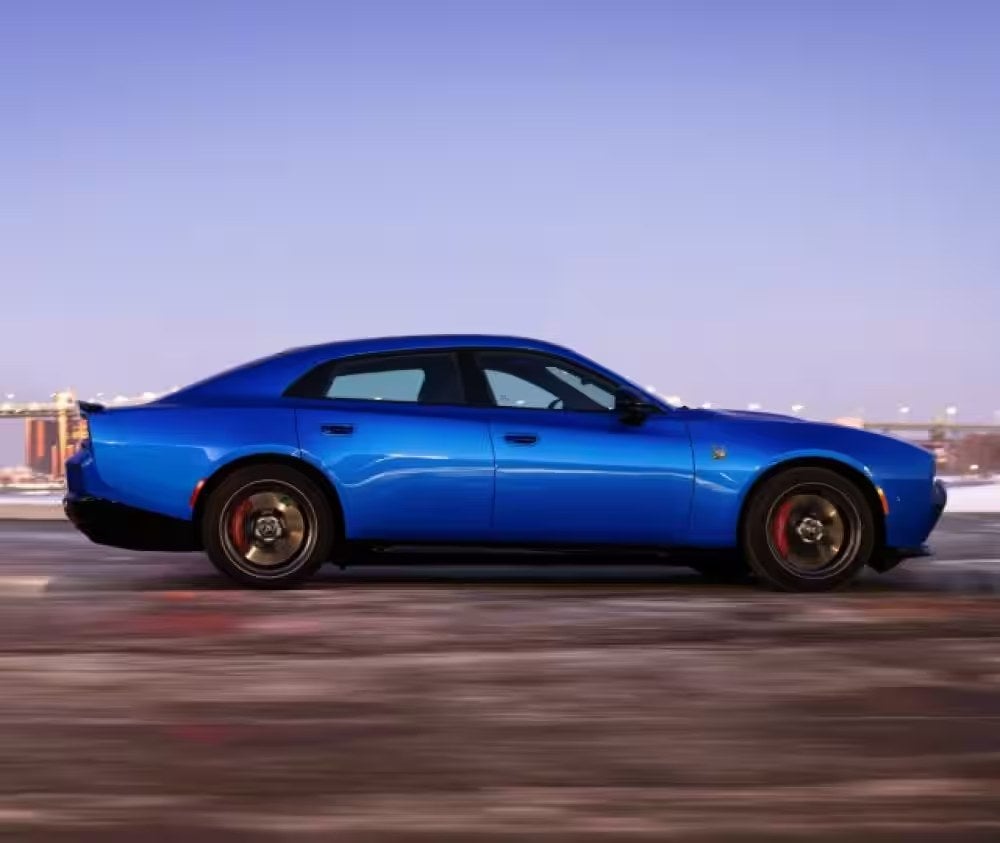
The most common tire mistake we see is judging tires by how they look from the driver's seat. Tread can seem fine at a glance while one edge is worn bald, the rubber is cracking, or a belt inside has shifted after last year's potholes. At Town & Country Jeep Chrysler Dodge Ram in Levittown, we'd rather you catch those problems in your driveway than on a broken-up stretch of Hempstead Turnpike. These five signs tell you when your Charger Daytona needs new tires, and what to do about each one.
Sign 1: Your Tread Is Down to the Wear Bars
Tread pushes water out from under the tire and gives the rubber something to bite with. Once it gets shallow, the tire can't clear slush the way it used to. It also has less cushion when a pothole edge hits it.
What to look for
Modern tires have small raised bars molded across the bottom of the grooves. When the tread wears down flush with those bars, the tire is at 2/32 of an inch, the legal minimum in New York, and it's done. You can also use a penny. Put it in a groove with Lincoln's head pointing down. If you can see the top of his head, you're at or near that line.
What to do
Don't wait for the bars. A quarter works the same way, and if you can see all of Washington's head, you're under 4/32. That's where wet and snowy grip starts dropping off fast.
Check the inside, middle and outside grooves on all four tires, because wear isn't always even. If any spot is close, start shopping now, not after the first thaw.
Sign 2: Uneven Wear Patterns
When wear isn't even across the tread, the tire is telling you something about the car. An electric Charger Daytona is heavy and delivers its torque instantly, and both put a lot of load into the rubber. Small alignment or pressure problems show up faster than you might expect.
What the patterns mean
- Worn on both outer edges: the tire has been running low on air.
- Worn down the center: too much pressure.
- Worn on one edge only: alignment is off, often after a hard pothole hit.
- Scalloped or cupped spots: worn suspension parts or a tire that's out of balance.
- Rears wearing much faster than fronts: common on cars that launch hard, and a sign rotations have been skipped.
What to do
Run your palm across the tread in both directions. A sawtooth feel is called feathering, and it usually points to alignment.
If you replace tires without fixing the cause, the new set will wear the same way. Ask for an alignment check when you replace them. Check pressure monthly with a gauge, too, because cold Long Island mornings drop it faster than most people realize.
Sign 3: Vibration and Changes in Steering Feel
A tire that's starting to fail often lets you feel it before you see it. An electric Charger Daytona is so quiet that a new hum or shake through the wheel tends to stand out, and that works in your favor.
What it means
A shimmy that shows up around highway speed on the LIE or Wantagh Parkway, and smooths out above or below that speed, is usually a balance problem. Constant vibration, or vibration that gets worse as you go faster, can mean a separated belt inside the tire, a bent wheel or a bubble in the sidewall. If the car drifts to one side on a straight, flat road, think alignment or uneven wear. Cupped tread often makes a steady drone that rises with speed.
What to do
Pull over somewhere safe and look at all four tires for bulges, flat spots or anything stuck in the tread. If nothing jumps out, ease off and get it looked at soon, especially if you've hit a pothole recently.
Internal tire damage can't always be seen from outside, and a tire with a broken belt can fail at speed. Balance and alignment are quick to fix. Ignoring them costs you tread and adds wear to your suspension.
Sign 4: Sidewall Cracks and Old Rubber
Plenty of drivers assume a tire with good tread is a good tire. Rubber ages whether you drive or not, though. Long Island's mix of summer heat, road salt and winter cold speeds that aging along.
Reading the sidewall
Look for fine cracks, sometimes called weather checking, on the sidewall and between the tread blocks. Shallow surface lines are an early warning. Cracks deep enough to catch a fingernail mean the rubber is drying out.
A bulge or bubble means the tire needs replacing right away. It means air has gotten between the tire's layers, often from smacking a pothole edge.
Finding the age
Locate the DOT code on the sidewall and read the final group of digits. The first pair is the week the tire was made and the second pair is the year. Many tire makers suggest a yearly inspection once a tire passes about five years old, and most recommend replacing by ten no matter how much tread is left.
A low-mileage car that lives in a garage can be the worst offender. Its tread looks new while the rubber underneath has hardened.
Sign 5: Less Grip on Wet Roads
This one sneaks up on people because it happens slowly. You get used to the car stepping out a little, or the stability light flickering when you pull away in the rain, and it starts to feel normal.
What it means
Worn or aged tires can't channel water well, so the tire rides up on a thin film instead of touching the road. That's hydroplaning, and it's more likely in the low spots that flood along Hempstead Turnpike after a storm. Instant electric torque makes slipping more noticeable, because the tires have to find traction the moment you press the pedal. Longer stops in the rain are another tell.
What to do
- Notice whether traction or stability control kicks in more often than it used to.
- Compare how the car stops on wet pavement with how it stops on dry.
- Find out whether you're on summer performance tires. They lose grip as temperatures drop and aren't meant for snow or near-freezing roads.
If any of that sounds familiar, don't wait for a close call to replace them. Grip is the whole job of a tire, and a car this quick needs all of it.
Picking Replacements That Suit the Car
Once you know it's time, the next question is what to put on. Tires for a heavy, powerful electric car aren't interchangeable with whatever's cheapest on the rack.
What matters
- Load and speed ratings should meet what's printed on the door-jamb placard, since an EV carries more weight than a gas car its size.
- Tires built for electric vehicles often use stiffer construction and quieter tread, which helps with wear and road noise.
- Summer performance tires grip best in warm weather but harden in the cold. All-seasons give up some sharpness for year-round use. A dedicated winter set is worth considering if you drive out east in snow.
- Check whether your car uses the same tire size front and rear. If it does, regular rotations stretch tire life. If it doesn't, plan on replacing in pairs at minimum.
Replacing in sets
If your Charger Daytona is all-wheel drive, mismatched tread depths can strain the drivetrain, so replacing all four together is usually the smart move. Our parts department can help you match the original sizes and ratings so the car drives the way it was designed to.
Scheduling a Tire Check Before Pothole Season
Potholes on Long Island tend to hit hardest from late winter into early spring. Water seeps into cracks, freezes, expands and breaks the pavement apart. Worn tires take a beating then, so the best time to check yours is before the freeze-thaw cycle gets going.
What a tire check should cover
- Tread depth measured across every tire
- Pressure set cold to the placard number
- Sidewall and DOT date inspection
- Alignment and balance if wear or vibration points that way
- A look at the wheels for bends or cracks
Getting it done
Town & Country Jeep Chrysler Dodge Ram is a full-service Chrysler, Dodge, Jeep and Ram dealership in Levittown, and we serve Nassau, Suffolk and Queens. You can book a service visit and ask for a tire inspection on its own or alongside other work.
Catching a tire problem before a pothole finds it is cheaper and safer than dealing with a bent wheel or a blowout on the shoulder of the Meadowbrook.
Levittown, NY
- Check tread with a quarter, not just your eyes, and look at the inside edge too.
- Uneven wear and new vibrations point to alignment or damage that will ruin a new set if you don't fix them.
- Have a full tire check done before the freeze-thaw cycle starts, not after the first big pothole.
FAQ Common questionsHow often should I check tire pressure in the winter?Check it at least once a month and before any long drive, first thing in the morning before the car has moved. Cold air lowers pressure, and an underinflated tire is more likely to be damaged by a pothole. Set it to the number on the driver's door-jamb placard, not the maximum printed on the tire. Can I replace just two tires instead of four?Sometimes, but it depends on your setup. On an all-wheel-drive car, big differences in tread depth between tires can strain the drivetrain, so replacing all four is usually recommended. If you do replace only two, the new ones generally go on the rear for stability. Ask a technician what's right for your car. Do electric cars like the Charger Daytona wear tires faster?They often do. EVs are heavier than comparable gas cars and deliver torque instantly, and both put extra stress on the tread. Smooth acceleration, correct pressure and regular rotations, if your tire sizes allow them, all help a set last longer. What should I do right after hitting a bad pothole?Pull over when it's safe and look for bulges, cuts or a bent wheel rim. Over the next few days, watch for new vibration, a pull to one side or a steering wheel that sits off-center. If you notice any of those, get an inspection soon, because internal damage isn't always visible and can get worse quickly. |
Let us take care of it Book online in a minute and pick a time that works for you. Or call (516) 271-3278 · 3156 Hempstead Tpke, Levittown |