




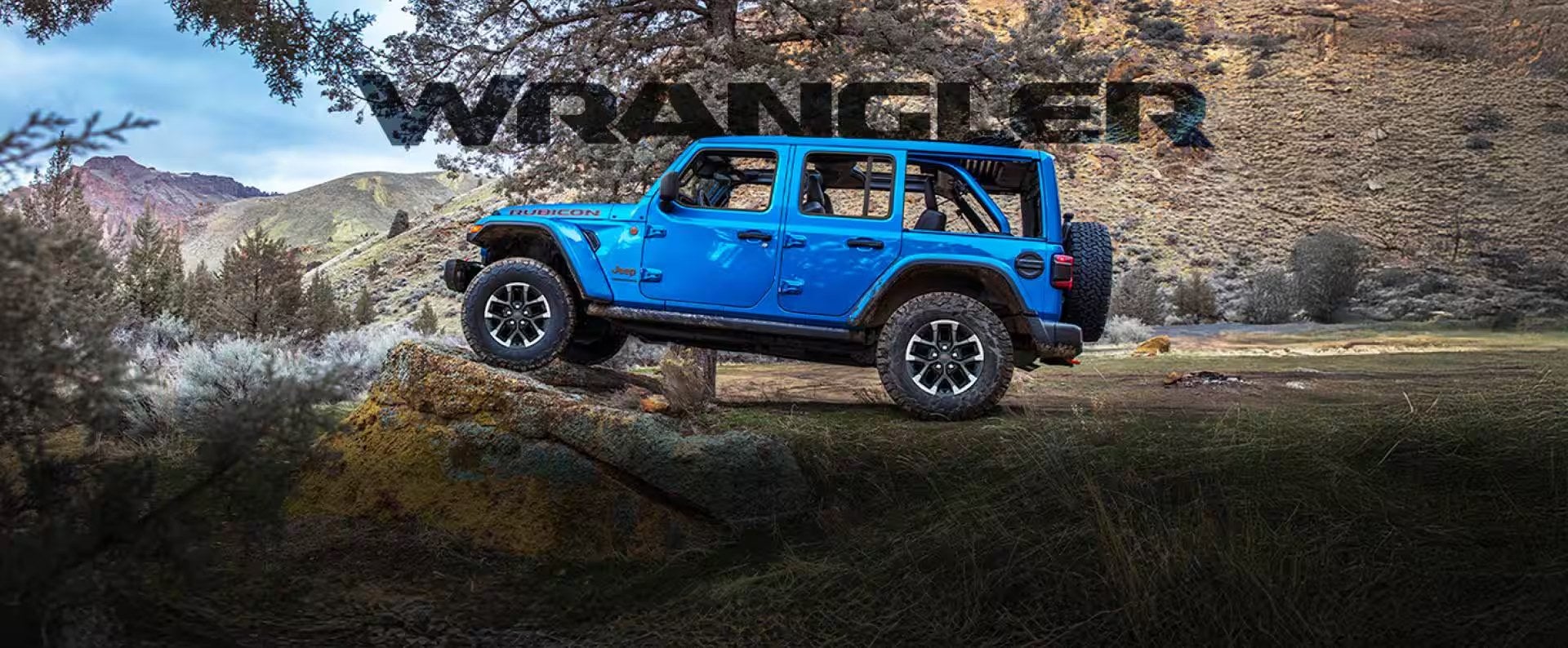
Regenerative braking turns some of the energy your Wrangler 4xe would normally waste as heat into electricity for its battery. That recovered charge helps you travel farther on electric power before the gas engine needs to step in. At Town & Country Jeep Chrysler Dodge Ram in Levittown, 4xe shoppers and owners often ask us to explain it in plain terms before they buy. Here's how it works, how it feels and what you can adjust.
How Regenerative Braking Works
In a regular vehicle, braking turns motion into heat. Pads squeeze the rotors, friction slows the wheels, and that energy drifts off into the air. It's gone for good.
The Wrangler 4xe handles slowing down differently. Its electric motor can work in reverse, acting as a generator when you lift off the accelerator or press the brake pedal gently. Instead of pushing the wheels, the motor lets the turning wheels spin it, and the resistance that creates is what slows you down. That electricity goes back into the high-voltage battery.
Why it matters
Think of it as a refund on energy you already spent getting up to speed. You paid for that momentum with battery charge or gasoline. Regenerative braking gets part of it back instead of burning it off as heat.
You don't have to switch anything on to use it. It works automatically every time you slow down. Behind the scenes, the system decides how much of the slowing comes from the motor and how much comes from the brake pads. You just drive.
Where the Recovered Energy Goes
The 4xe pairs a gas engine with electric motors and a high-voltage battery pack. Regen tops up that battery. When you coast toward a red light or ease down a hill, watch the power gauge in the instrument cluster swing into its charge zone. That's your sign the motor is making power, not using it.
How that energy gets used depends on the drive mode you pick:
- Hybrid blends gas and electric power and lets the system decide when to draw on stored charge.
- Electric runs on the battery as long as charge and conditions allow, so recovered energy turns straight into extra electric driving.
- eSave holds your battery charge for later. That's handy if you'd rather save electric driving for your own neighborhood.
Regen works in all three modes. You'll notice its benefit most clearly in Electric mode, because recovered charge delays the moment the engine has to start.
There's one limit. A battery can only take in so much. When the pack is nearly full, there's less room for incoming energy, so the system leans more on the friction brakes. That's why regen can feel a bit weaker right after a full charge at home and stronger once you've used some of that charge.
What You'll Feel Behind the Wheel
In normal driving, most people barely notice regen. When you lift off the accelerator, the Wrangler slows a little more than a gas-only vehicle would while coasting, a bit like gentle engine braking in a lower gear. Passengers usually don't feel anything unusual.
The brake pedal
When you press the pedal, the 4xe blends motor braking and friction braking together. Light pressure leans mostly on the motor. Firmer pressure brings in more of the pads. The handoff is designed to feel smooth, but the pedal may respond a little differently from the gas vehicle you're used to. Most drivers stop noticing after a drive or two.
Sound and sensation
You may hear a faint electric hum as the motor recovers energy, especially at lower speeds with the engine off. That sound is normal.
With Max Regen turned on, the change is easier to feel. Letting off the accelerator slows the Jeep noticeably, enough that you'll touch the brake pedal less in traffic. Expect stronger slowing, though, not true one-pedal driving. You'll still use the brake to come to a full stop.
The feel is personal, and reading about it only gets you so far. The quickest way to judge it is to book a test drive and try it on roads you actually use.
How Regen Affects Your Electric Range
Regen doesn't create energy. It recovers part of what you used to get moving, so its value depends on how often you slow down. Some of the energy is always lost along the way, so you never get back everything you spent.
Where it helps most
Stop-and-go driving gives regen the most chances to work. A crawl down Hempstead Turnpike, errands along Wantagh Avenue or a school pickup line means constant slowing and plenty of energy to recover. Long downhill stretches help too, because the motor can recharge for a sustained period.
Steady highway cruising is a different story. On the Southern State or the LIE at a constant speed, you're rarely slowing, so there's little to capture. Range on those trips depends more on speed, temperature and how much charge you started with.
Habits that make a difference
- Look ahead and lift off the accelerator early when you see a light changing.
- Brake gently and steadily rather than late and hard.
- Let the Jeep coast down to the speed you want before using the pedal.
Smooth, early braking keeps more of the slowing on the motor. Hard, last-second stops push more of the work onto the friction brakes, and that energy turns into heat instead of charge.
Does It Replace Normal Brakes?
No. The Wrangler 4xe has a full friction brake system, and it's always ready. Regen does a lot of the everyday slowing, but the pads and rotors take over whenever the situation calls for more stopping power than the motor can deliver.
Your regular brakes do the work when:
- You need to stop hard or quickly.
- You're crawling the last few feet to a full stop, where the motor has little effect.
- The battery is too full or too cold to accept much charge.
- Anti-lock braking or stability control steps in on a slippery surface.
Press the pedal hard, and the Jeep stops the way you'd expect. Safety systems work the same way they do on any modern vehicle.
What it means for maintenance
Because the motor handles much of the gentle braking, pads often wear more slowly than on a gas-only vehicle. That's the upside. The downside is less obvious: brakes that see less use can collect rust on the rotors and stiffness in the caliper hardware. Long Island winters, with salt on every road, make that more likely.
Don't skip brake checks just because the pads look thick. When you book a service visit, ask the technician to inspect the rotors and calipers, not just pad thickness.
Adjusting Regen Settings
Standard regen is always part of how the 4xe slows down. You can't switch it off, and you won't need to. What you can change is its strength, using the Max Regen button near the drive mode controls. Press it once, and an indicator in the cluster confirms it's on. Press it again to go back to the standard setting.
When Max Regen makes sense
- Heavy local traffic, where you're on and off the accelerator constantly
- Long downhill stretches, where stronger motor braking keeps your speed in check
- Drivers who like controlling speed mostly with the accelerator pedal
- Anyone trying to make the most of electric-only driving around town
When the standard setting may suit you better
On open highways, a lighter setting lets the Wrangler coast more freely when you ease off. That can feel more relaxed and natural. Some passengers also prefer the gentler slowing, especially in the back seat.
Snow, ice or wet leaves call for smooth inputs. Sudden strong slowing, even from the motor, can feel abrupt on a slick surface. Some owners switch back to standard regen in bad weather for a gentler response.
There's no wrong answer. Try both settings for a few days on your usual routes, and you'll quickly figure out which one fits your driving.
Regen in Cold Weather and Off-Road
Conditions affect how much energy the 4xe can recover, so it helps to know what to expect before the seasons change.
Cold mornings
Batteries don't like to take in charge when they're cold. On a frosty morning, regen may feel weaker than usual for the first part of your drive. The friction brakes make up the difference, so stopping isn't affected. Regen comes back to normal strength as the battery warms. Parking in a garage and plugging in overnight helps the pack start the day in better shape.
If the Jeep slows differently on a winter morning than it did in July, nothing is wrong. It's battery temperature at work.
On the trail
The Wrangler 4xe is still a Trail Rated Jeep, and regen has a real job off-road. Creeping down a steep, rocky descent, the motor can help control your speed while sending a little energy back to the battery. Combined with careful throttle control, that can make slow descents feel more composed.
On very steep or loose ground, use the off-road tools Jeep designed for that terrain, along with the brake pedal, and let the vehicle's systems manage traction. Think of regen as a helper, not your descent plan. It recovers energy and takes some strain off the brakes, but you're still the one controlling the speed on the way down.
What to Do Next
If you're considering a Wrangler 4xe, the most useful step is getting behind the wheel. Ask to try Max Regen on and off during the same drive. Spend part of it in local traffic and part at highway speed so you can feel the difference both ways. Pay attention to the brake pedal too. Ten minutes on familiar roads will tell you more than any explanation.
Questions worth asking
- How do the drive modes work with regen on my daily route?
- What's the best charging setup for where I park overnight?
- What brake inspections does the maintenance schedule recommend?
If you already own a vehicle, Town & Country Jeep Chrysler Dodge Ram has online trade-value tools, so you can value your trade before you visit and come in with a realistic number in mind.
After you buy
Owning a plug-in hybrid works best when you have support close by. The dealership has dedicated sales, service and parts departments, plus service and parts support after the purchase. That covers routine brake checks, software questions and any regen behavior that doesn't feel right.
If something about the way your 4xe slows down seems off, bring it in. A quick look can tell you whether it's normal regen behavior or something that needs attention.
Levittown, NY
- Slowing down puts a little charge back in the battery, so stop-and-go driving wastes less energy.
- Your regular friction brakes still handle hard stops and the last few feet before you stop, so they still need regular inspection.
- Max Regen adds stronger slowing when you lift off the accelerator, and a test drive is the best way to see if you like it.
FAQ Common questionsDoes regenerative braking work when the battery is fully charged?Only a little. A nearly full battery has less room to take in energy, so the Wrangler 4xe relies more on its friction brakes until you've used some charge. Regen gets stronger again as the battery level drops. Will regenerative braking make my brake pads last longer?Often, yes, because the motor handles much of the gentle slowing. Brakes that see less use can still develop rust and sticky caliper hardware, especially with road salt, so keep up with regular brake inspections. Can I turn regenerative braking off?Standard regen is always part of how the 4xe slows down, and it works automatically. You can turn the stronger Max Regen setting on or off with its button whenever you like. Does regen charge the battery enough that I don't need to plug in?No. Regen recovers only part of the energy you used to get moving, so it stretches your electric driving rather than replacing charging. Plugging in is still the main way to fill the battery. |
Want to see it in person? Come by for a test drive, or browse what is on the lot right now. Or call (516) 271-3278 · 3156 Hempstead Tpke, Levittown |